

- Home
- How it works
The PERC® burrow treatment on Colorado’s Front RangeDown the burrow, not on the lawn.
How a treatment works, what to expect on the day, and why there is nothing left behind.
The PERC® method
Every tunnel, in seconds.
PERC® stands for Pressurized Exhaust Rodent Control.
Instead of a bait on the surface or a trap at one hole, the treatment goes down the burrow and through it.
- 1
Probe in
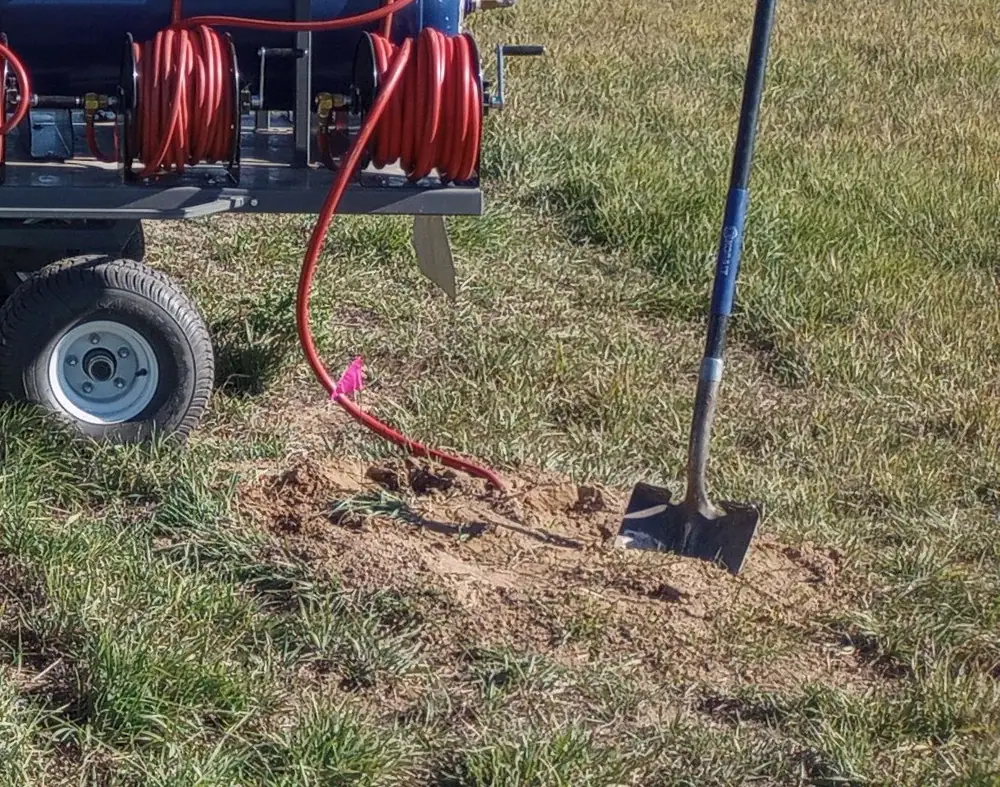
A probe from the rig goes into each active entrance. Several hoses work at once.
- 2
Pressure on
Pressurized gas, about 2.5 percent carbon monoxide, fills every connected tunnel.
- 3
Purged in seconds
The burrow is purged of air before the rodent can get out another entrance.
Why this method
Nothing left behind.
Baits, traps, shooting, blowing up burrows and low-pressure exhaust from a car all get used on burrowing rodents.
The Rodent Ranger’s view is that nothing is as effective and efficient as PERC®.
Pressure is the difference. The PERC® rig pushes gas through the whole connected system in seconds.
The animal is caught in an airless burrow before it can get out.
Because the treatment happens underground, no bait is scattered on the surface.
That matters on a ranch with horses, in a yard with dogs and on a school field.
The Rodent Ranger’s own figure is about a 90 percent reduction from a single treatment.
Any holes that reopen get a second pass.
On the day
What to expect.
Most jobs start with a walk-through.
Rich counts the active holes, and the price is per hole, set once the land has been surveyed.
Treatment pace depends on the terrain and the weather: 12 to 20 holes an hour. A backyard is quick.
A big colony is a day of steady work.
Keep kids, dogs and livestock away from the hoses while the treatment goes in.
After that, there is nothing on the ground to keep them away from.
Walk and count
Active holes are counted and marked. Old, caved-in holes are left out of the count.
Probes in
A probe goes into each active entrance.
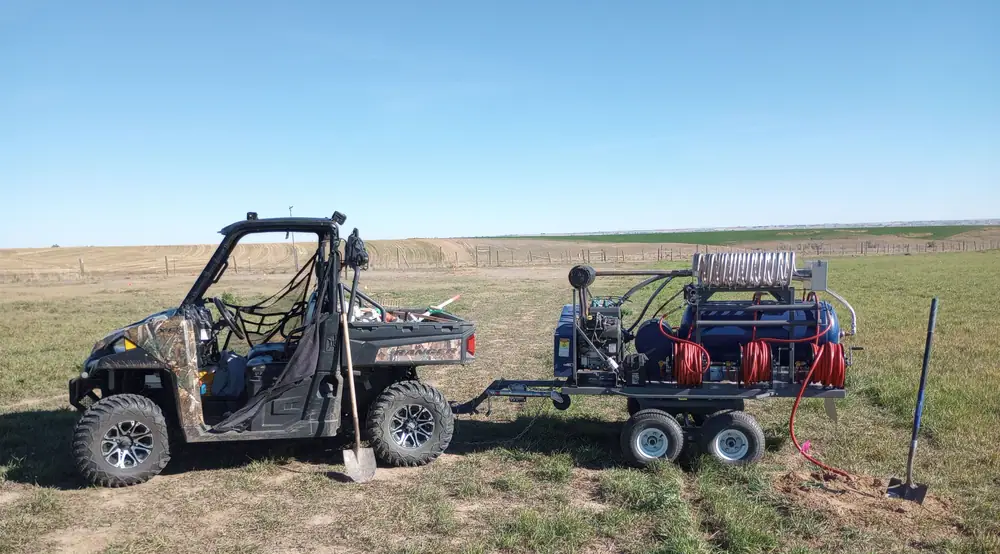
The rig has several hose reels, so more than one hole can be worked at a time.
Pressure on
Pressurized gas purges the burrow in seconds, hole by hole across the property.
Reopeners
Holes that open back up get treated again on a follow-up pass.
Who it is for
Backyards to open space.
Homeowners, farms and ranches, city grounds and open space, private schools, and water departments and reservoirs.
Questions
About PERC®.
What does PERC® stand for?
Pressurized Exhaust Rodent Control. The system comes from H&M Gopher Control.
It is built for gopher, ground squirrel and prairie dog control on farms, city land and schools.
What is in the gas?
Pressurized gas at about 2.5 percent carbon monoxide, per The Rodent Ranger’s own site.
It goes in through multiple probes or wands.
Is the method safe around kids, dogs and livestock?
Nothing is left on the ground afterward: no poison bait, no pellets and no traps.
Keep people and animals clear of the hoses while the treatment is going in.
How fast does it work?
The pressurized flow purges a burrow in seconds.
The Rodent Ranger’s own figure is about a 90 percent reduction from one treatment.
Holes that reopen get a second pass.
How is the job priced?
Per active hole. Rich walks the land and counts first.
The estimate is free, and the quote is based on what is actually there.
Terrain and weather set the pace: 12 to 20 holes an hour.
Free estimate
Tell Rich what is digging.
A quick description is plenty: what you are seeing, roughly how many holes, and where.
Rich calls back and sets a time to walk the land.
- Call or text(970) 301-8724
- HoursOpen 24 hours, every dayAs listed on Google
- PricingFree estimate, priced per holeSet once the land is walked
- Based inMilliken, COServing the Front Range, up to 125 miles out
Request a free estimate
Say what is digging and where. Rich calls back to set a time to walk the land. The estimate is free.